


The core competitiveness of furniture manufacturing lies both in the texture of wood and in the quality of painting. For a long time, traditional manual painting has been constrained by labor, environmental protection, quality, and other pain points, making it difficult to adapt to the high-quality development of the industry. Automated painting lines, with their advantages of standardization, efficiency, and greenness, have restructured the painting process and become a key support for furniture enterprises to reduce costs and increase efficiency.
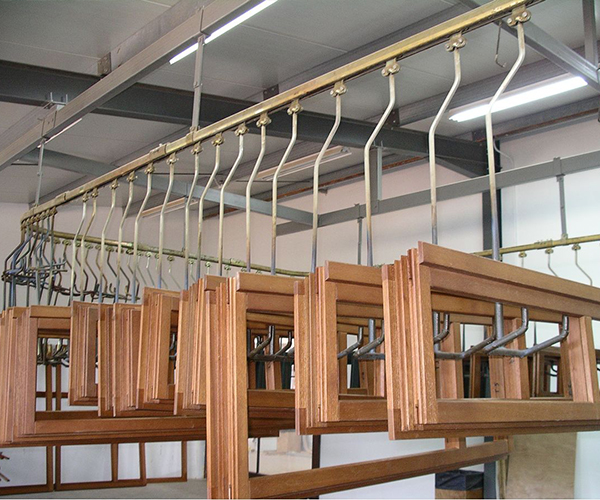
1. Traditional painting faces prominent pain points, urgently needing a breakthrough
The drawbacks of traditional manual painting are increasingly prominent: Firstly, there is a severe labor shortage, with skilled painters being costly and highly mobile. Moreover, the painting effect relies on experience, which is prone to defects such as color differences and sagging, resulting in a low yield. Secondly, there is significant pressure on environmental protection, with overspraying leading to severe waste and potential VOCs emissions exceeding standards, posing compliance risks for enterprises. Thirdly, the efficiency is low, with slow production changeover, making it difficult to adapt to the trend of small batches and multiple varieties of customization.
II. Core application of painting line: full-scenario adaptability, addressing pain points
Automated painting lines have been widely applied to the coating of various furniture types, including solid wood, panel, custom-made, and upholstered furniture, achieving triple improvements in efficiency, quality, and environmental protection. In the field of solid wood furniture, its combined process can preserve natural textures and accommodate irregular-shaped products; in the field of panel furniture, electrostatic spraying improves paint utilization and solves color difference issues; in the field of custom-made furniture, modular design enables rapid model change and meets personalized needs; in the field of upholstered furniture, low-temperature spraying avoids damage to fabrics and enhances durability.
Significant technical advantages: Efficiency is improved by 3-5 times compared to manual labor, and labor costs are reduced by 40%-60%. Parameters are precisely controllable, and the coating yield is increased to over 99.5%, ensuring more stable quality. Equipped with paint mist recovery and VOCs treatment equipment, the paint utilization rate reaches over 85%, and emissions meet standards, aligning with green development needs.
III. Application Key Points and Development Trends
When applying a painting line in enterprises, three points should be noted: selecting equipment that fits the company's scale and product categories, with modular equipment being suitable for small and medium-sized enterprises, and remote operation and maintenance systems being adaptable for large enterprises; standardizing daily operation and maintenance to ensure stable equipment operation; and adapting the process, selecting appropriate coatings, and precisely adjusting parameters.
In the future, the painting line will undergo upgrades towards intelligence, greenification, and integration: integrating AI and big data to achieve intelligent regulation and control throughout the entire process; relying on environmental protection technology to reduce VOCs emissions and achieve energy recycling; integrating with various production links, connecting with enterprise management systems, and enhancing the level of refined management.
IV. Conclusion
The automated painting line has overcome the bottleneck of traditional painting, driving the furniture industry to transition from extensive manufacturing to precision and intelligent manufacturing. For furniture enterprises, keeping up with industry trends and making rational use of the painting line are essential to seize opportunities in competition, achieve sustainable development, and ensure that every piece of furniture embodies quality and value.
